Doing It the DISCUS Way
This recent Storage Terminals Magazine article highlights the DISCUS approach to American manufacturing.
……………………………………………………….
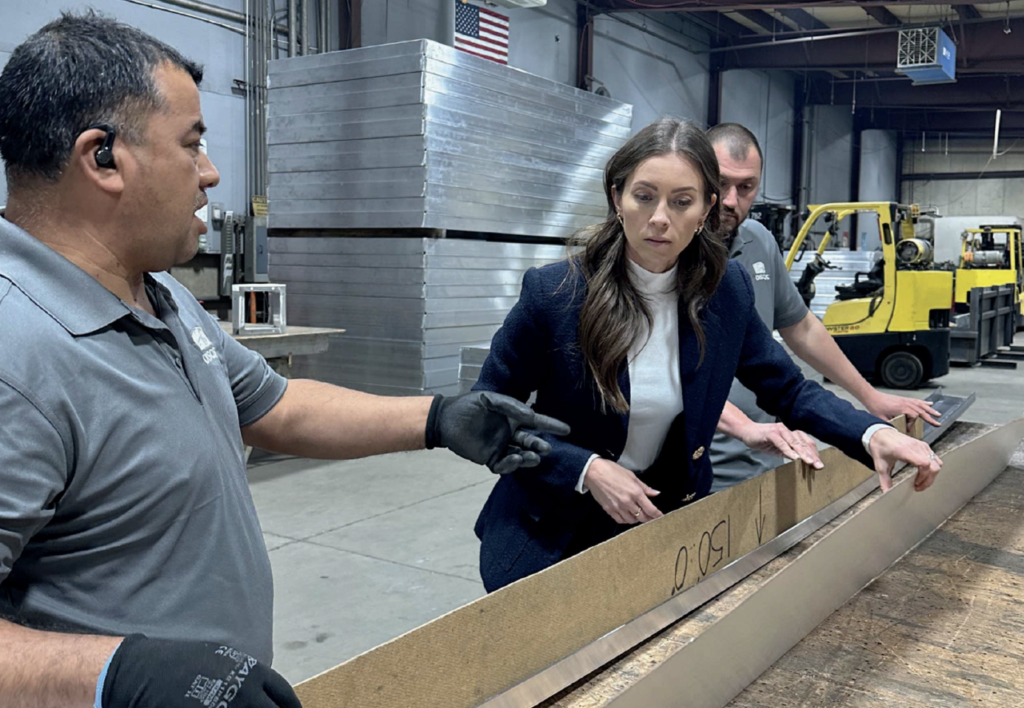
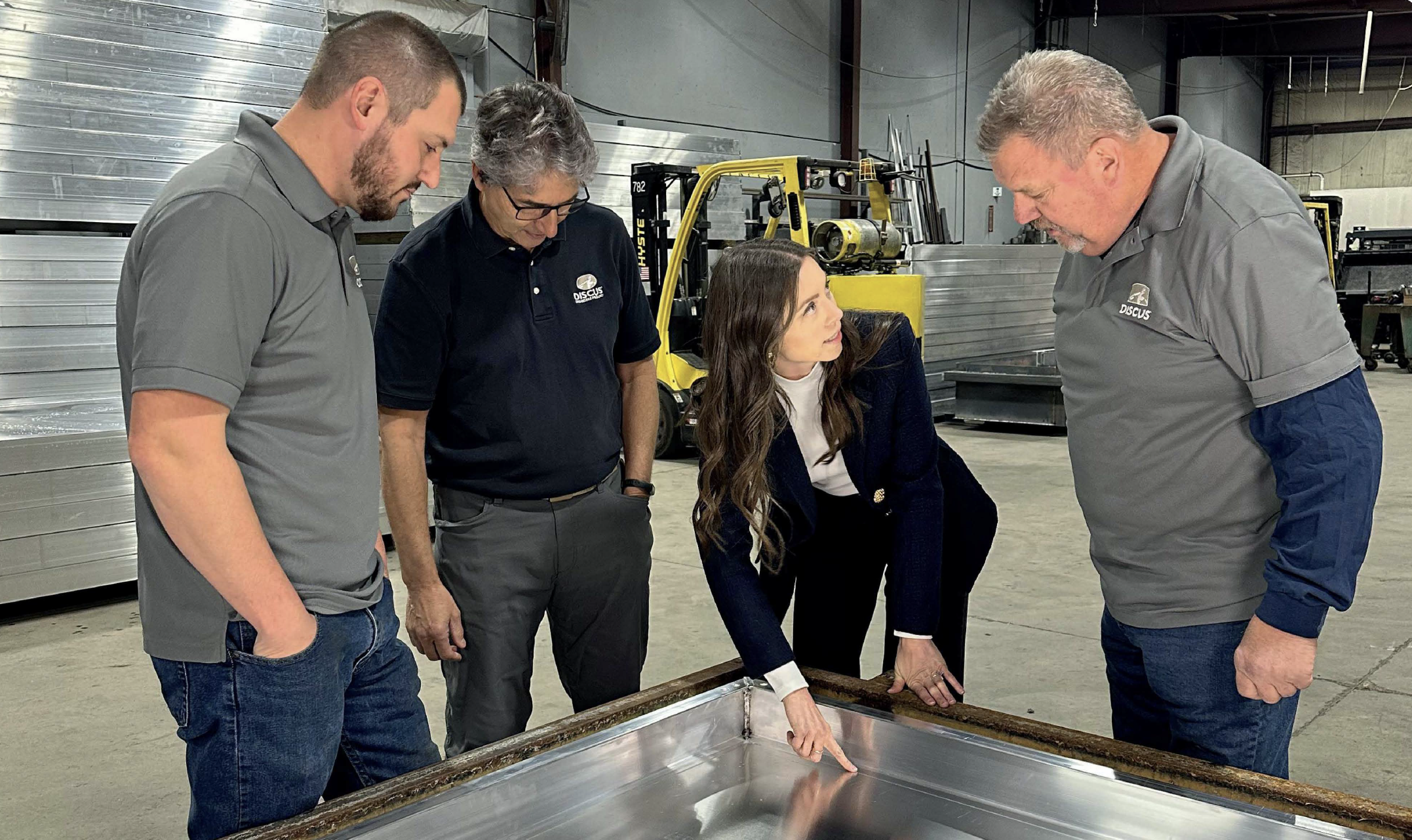
Julie Helms, CEO of DISCUS Engineered Products sat down with Storage Terminals Magazine to share the company’s unconventional approach to growth, and what’s ahead for the American manufacturer.
STM: What inspired the founding of DISCUS, and how has that vision evolved over the years?
JH: DISCUS was founded to solve a longstanding engineering problem in the oil and gas storage tank industry. For decades, every aluminum internal floating roof on the market relied on enclosed flotation compartments, a design that introduced unnecessary risk, made inspections more difficult. and created long term maintenance challenges.
Rather than accept those limitations, DISCUS set out to reimagine the design from the ground up. The result was the Open Raft, a patented aluminum internal floating roof that eliminates enclosed pontoons, panels, and compartments entirely, improving safety, reducing emissions, and increasing long term reliability.
From the beginning, DISCUS’s vision has been anchored in the principles of safety, engineering excellence, emissions reduction, and American manufacturing. Over time, that vision has expanded beyond a single innovation into a broader commitment to how the company operates and delivers for customers.
As demand has grown, so has the team behind the technology. DISCUS has strengthened its workforce to deepen technical expertise, support increased project volume, and ensure every installation reflects the same high standards that defined the company’s founding.
Today, the mission remains the same: to design and build safer, smarter, U.S. made solutions that raise the standard for the industry. Our capacity has evolved because of a larger, more capable team, and a stronger operational foundation. That foundation now includes a structured approach to continuous improvement and cross-department alignment. AIM.
STM: Can you explain what AIM is and how it works at DISCUS?
JH: AIM is an internal program DISCUS created to Advance, Integrate. and Modernize the way the company operates. It was designed as a structured approach to improving both the day to day work and the long term systems that support the business.
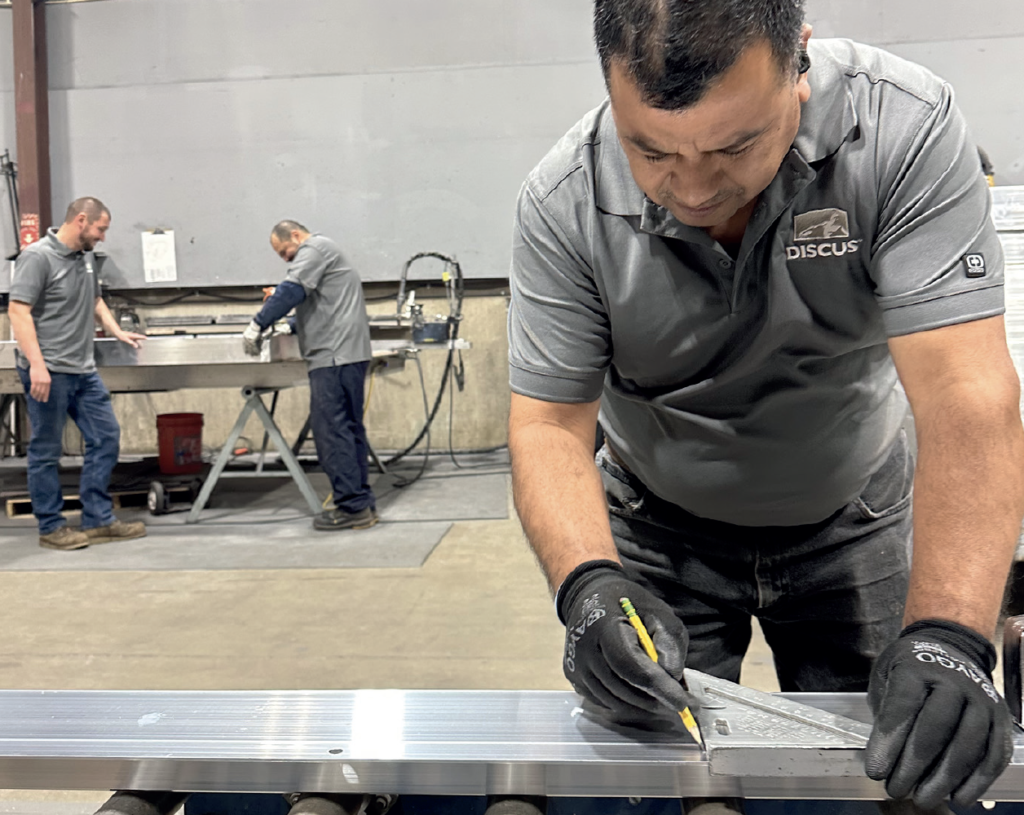
At the heart of AIM is a core belief: every person on the DISCUS team has valuable ideas. The most meaningful improvements rarely come from managers. They come from the people who see the work every day, in the shop, in the field, in logistics, in engineering, and in customer support. Every suggestion is welcome, whether it involves refining a workflow, improving a tool, redesigning a part. or changing how information flows.
Through AIM, DISCUS has implemented improvements at every scale. It has supported major operational advancements, and driven small but highly impactful refinements.
Once an opportunity is identified, AIM provides the structure for evaluating the need, planning the improvement, and implementing it in a methodical, measurable way. It ensures that changes are intentional, aligned with the company’s mission, and supportive of long term scalability.
AIM is a continuous improvement discipline woven into how DISCUS thinks, operates, and grows, ensuring that as the company expands, its systems, tools, and workflows expand with it.
STM: Which innovations are DISCUS currently working on, and how do they address the industry’s needs?
JH: One of the most meaningful areas of innovation at DISCUS has been the continued advancement of our double shoe seals. Almost a decade ago, we made a strategic decision to double down on double shoe seals as the long term direction for IFR seal technology. We focused on redesigning and streamlining our approach so these seals could be cost competitive and accessible, even if that meant prioritizing long term value over short term sales. We believed the long term benefit for the customer is significantly greater with double shoes, and we set out to make that the competitive standard.
While shoe-and-wiper combinations remain prevalent in the industry, wipers are a wear item and often do not provide the highest long term value. Shoe seals last longer. They are not the right choice in every case, but when the goal is maximizing in-service time with minimal repairs, they should be considered the seal system of choice. To support that goal, we developed a shorter double shoe seal with an overall height profile comparable to that of a typical shoe-wiper combination, and with no hanger assembly below the deck. This allows for maximum tank working capacity and maximizes seal service life.
Another important innovation is our liquid mounted seal, which is patented and has been part of our product line for nearly a decade. While not new, it has gained significant attention recently due to Subpart Kc requirements. Our liquid mounted seal features a stainless steel armor plate which eliminates abrasion and prevents product contamination caused by met-al-on-fabric wear. Since the publication of Subpart Kc, several major U.S. pipeline companies have adopted this seal because it allows them to meet the emissions performance of a liquid-mounted seal while achieving the service life typically associated with a shoe seal.
As a products company that is not in the inspection or maintenance business, our goal is straightforward: to provide solutions that require less maintenance, not more. Frequent repairs and parts replacement may benefit maintenance companies, but they do not always serve the long term interests of the customer. Our innovations reflect that philosophy by focusing on durability, reliability, and reducing total lifecycle cost.
STM: What is your vision for the future of DISCUS over the next 5 years?
JH: Our vision is to continue growing and scaling DISCUS, but to do so at a conservative, controlled pace that protects the quality we are known for and strengthens our foundation as we expand. Our goal is not hypergrowth; our goal is responsible growth. Even with recent growth, increasing industry adoption, and ongoing customer requests for additional products, our commitment to quality slows us down, and that is intentional. A key part of that quality is our commitment to American manufacturing and fabrication, which ensures oversight, consistency, and supporting American jobs and local economies. We would rather grow steadily, responsibly, and in the United States than grow quickly in ways that could compromise the standards that define who we are.
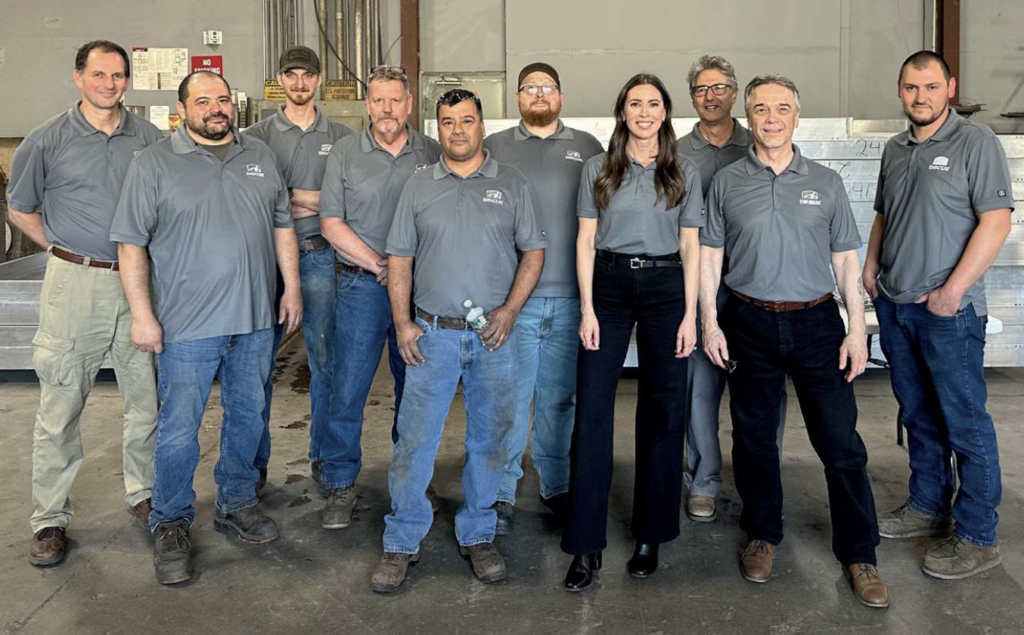
As we grow, we are equally focused on the people who will carry DISCUS into the future. We have strong emerging leaders within the organization, and part of our long term vision is seeing them step into larger roles, shaping the next chapter of the company, while holding onto the same values that have defined us from the beginning.
In short, our future is rooted in three priorities: scaling responsibly, keeping our work in the United States, and developing the next generation of leaders who will continue to uphold the standards that DISCUS is known for.
STM: In what ways is DISCUS positioned to lead the industry forward, and what role do you see the company playing in shaping future standards?
JH: DISCUS leads the industry with patented technologies that lower the benchmark on emissions, while improving things like safety, operations, and working capacity. The OpenRaft is, by definition, the lowest emissions IFR on the market. LAER is EPA’s term that defines the Lowest Achievable Emission Rate. There is only one “lowest,” and OpenRaft meets that definition. On projects where LAER is required, there is only one option.
As air quality districts adopt LAER requirements, the industry will be pushed into a technology race to meet or compete with the DISCUS standard. That pressure will benefit midstream oil and gas companies by expanding the availability of high performing IFRs, and it will ultimately benefit the general public by lowering emissions at scale. To understand the order of magnitude that DISCUS reduces emissions, a typical AIFR retrofit to DISCUS results in an emissions reduction of 25-65 percent. This has the potential to have meaningful ramifications at scale if every new IFR were DISCUS, or comparable with DISCUS in terms of emissions.
When one product sets a benchmark, other products tend to improve. Competition makes all of us better.
By continuing to innovate in floating roof design rather than producing commodity products, and by maintaining our commitment to U.S. manufacturing and long term product reliability, we help raise the bar for what the industry expects (and what regulators and customers can demand) in terms of performance, longevity, safety, and emissions reduction.
STM: How has DISCUS expanded its market presence, and what strategies have been most effective in reaching new customers?
JH: DISCUS has expanded its market presence by staying focused on what works: delivering a superior product, a commitment to engineering excellence, and showing up consistently in the field. Our growth has been driven by the industry recognizing the performance advantages of our systems and the engineering behind them. Customers and contractors who have worked with us and see the reliability of our systems continue to recommend us to others. That ground swell of credibility cannot be bought.
As the industry has evolved, we’ve also become more intentional about amplifying the work we are doing. Publications like Storage Terminals Magazine and Tank News International have helped us reach a broader audience and showcase the innovations that matter most for emissions reduction and long term IFR performance. These efforts ensure that decision makers are aware of the solutions available to them.
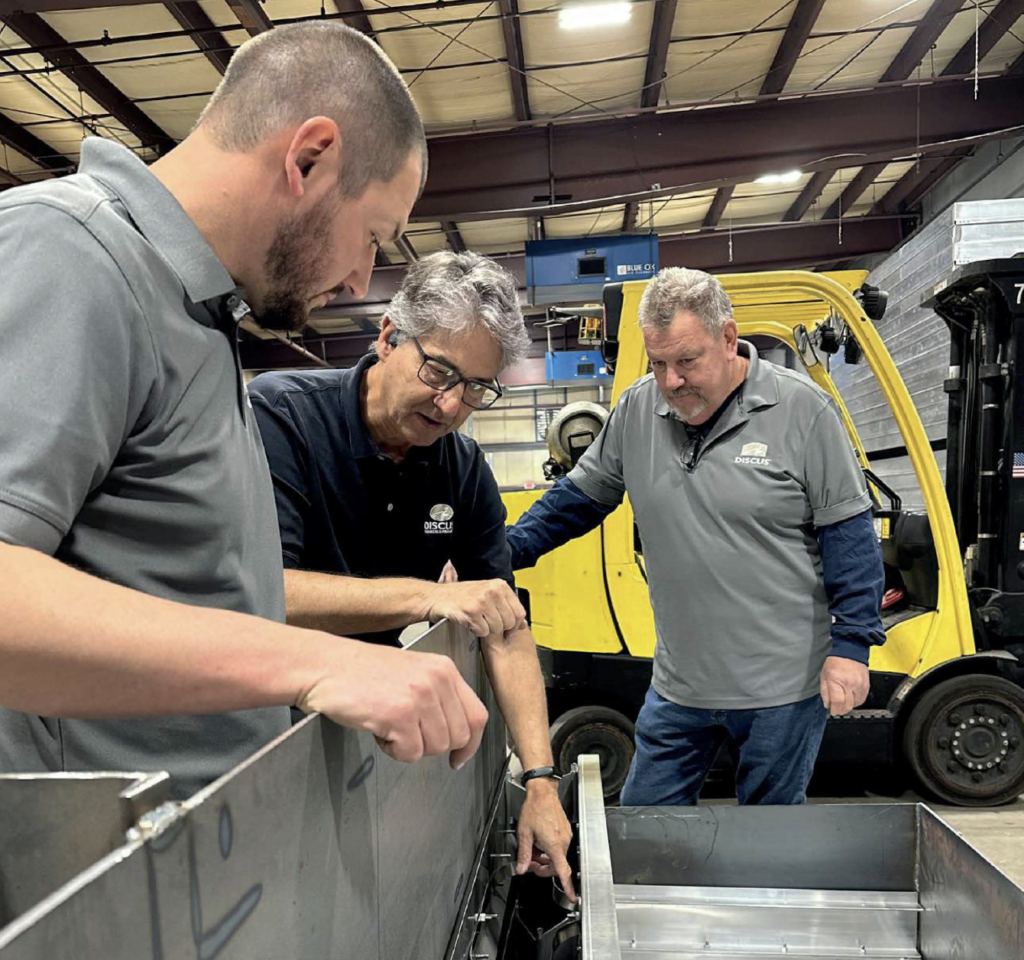
Our strategy is simple: lead with quality, communicate clearly, and make sure the people who need our technology know it exists.
STM: What metrics do you use to measure growth at DISCUS, and how do they inform your strategic decisions?
JH: At DISCUS, we measure growth in ways that go beyond traditional revenue and volume metrics, which can be subject to market cycles and short term spikes.
We also look at indicators that reflect long term health, product performance, and operational strength. A few of the most meaningful measures include:
- Addition of new customers and companies We do a lot of repeat business, and are extremely proud to be invited back into terminals year-after-year. And when new operators, engineers, and air quality specialists select DISCUS, it signals that the broader industry is recognizing the value, performance, and emissions reductions our systems provide. Increased adoption informs where we need to focus our engineering, fabrication capacity, and customer support.
- Expansion and development of our team Growth at DISCUS includes developing the next generation of leaders, not just adding headcount. When our team steps into larger roles, expands skills, and contributes new ideas through AIM, it tells us the organization is scaling in a healthy, sustainable way.
- AIM -driven improvements The number and quality of AIM initiatives, whether operational refinements, process mapping insights, or field-driven design feedback, serve as internal indicators of momentum. When improvements are identified and implemented consistently across departments, it shows that the business is maturing operationally.
- Our ability to maintain quality while increasing volume Because we intentionally prioritize quality over everything, one of our key indicators of growth is our ability to meet rising demand without compromising fabrication standards, or installation performance. Because the DISCUS OpenRaft is one of the most testable and most tested IFRs on the market, we can readily track product quality in the shop and the field. When those metrics remain strong as volume increases, it signals that our systems and people are scaling correctly. These metrics help guide long term decisions like when and how to expand the team, and when to refine operations.
STM: What do you want the industry to understand about DISCUS?
JH: We are not just a products fabricator, nor are we just an engineering company. DISCUS is an engineered products company. We lead with engineering and build systems for long-term performance.
Our focus is on engineered solutions that function as capital investments with ROI, not simply interchangeable cost items. We take a long-term view of product performance. We design for predictable, repeatable results, and we build with the intention that our systems require less maintenance over their service life, not more. That philosophy guides our engineering decisions, our manufacturing standards, and our commitment to American made products.
Our customers choose DISCUS because they want solutions they can trust that are backed by a team committed to raising the bar for what an IFR should deliver.